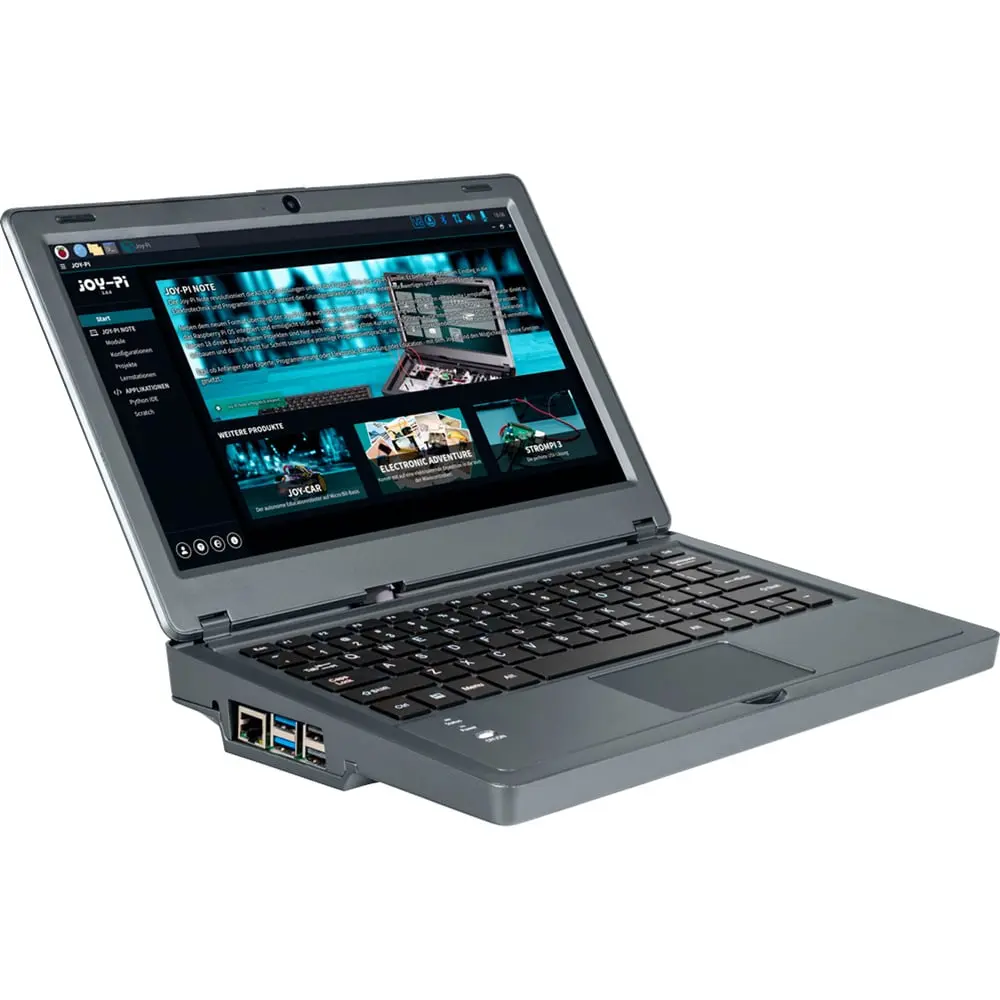
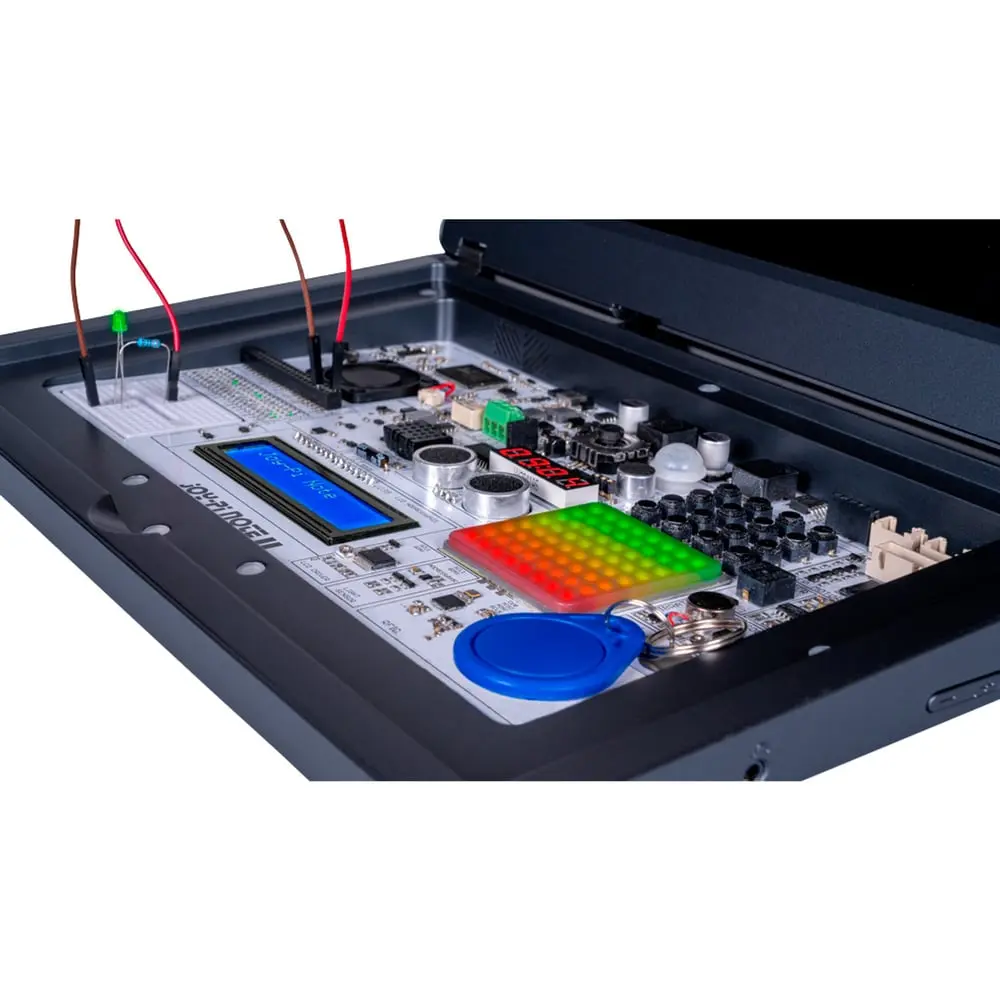
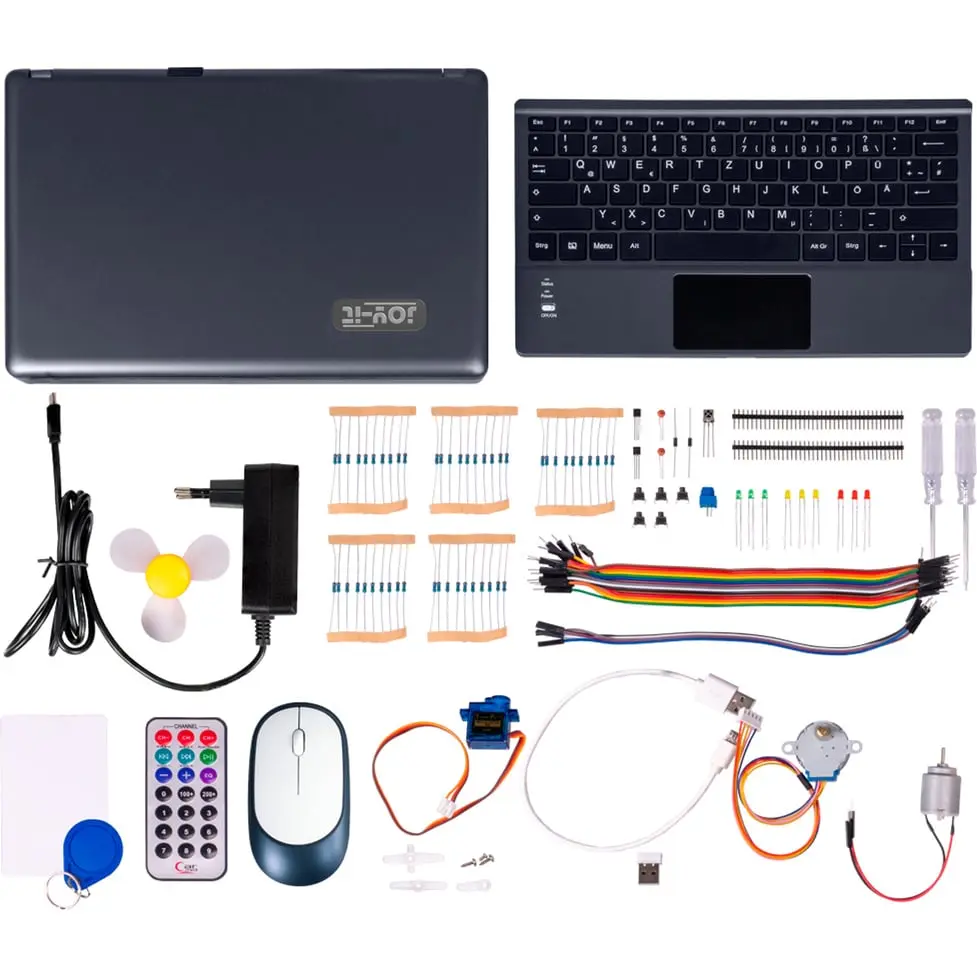
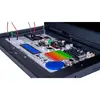
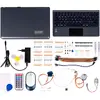
The Joy-IT Joy-Pi Note 2 laptop is compared against alternative portable computers such as the Lenovo IdeaPad Slim 3 15ARP10, Lenovo V15 G4 ABP, HP 255R G10 (Ryzen 3), HP 255R G10 (Ryzen 5), and the Lenovo IdeaPad 5 2-in-1 14Q8Y11 convertible. While all of these devices belong to the laptop category, the Joy-IT model differs fundamentally through its specialized architecture: it is powered by a Raspberry Pi 5 microcomputer and features a fully integrated experimentation center. Whereas the alternative models are built for standard office tasks, multimedia, and daily productivity using pre-installed Windows operating systems, the Joy-IT product is specifically designed for developers, electronics hobbyists, and educational purposes.
⚙️ The table below compares key characteristics, including hardware platform, memory capacity, storage, and intended use, to clearly illustrate the differences between a specialized educational solution and traditional laptops.
| Specification | Joy-IT Joy-Pi Note 2 | Lenovo IdeaPad Slim 3 15ARP10 | Lenovo V15 G4 ABP | HP 255R G10 (Ryzen 3) | HP 255R G10 (Ryzen 5) | Lenovo IdeaPad 5 2-in-1 14Q8Y11 | Practical significance |
|---|
| Processor and Platform | ARM Cortex-A76 (Raspberry Pi 5) | AMD Ryzen 5 150 | AMD Ryzen 7 5825U | AMD Ryzen 3 7335U | AMD Ryzen 5 7535U | Snapdragon X Plus | Determines performance and software compatibility: alternatives run standard Windows software, whereas the main model is tailored for ARM development and hardware experimentation. |
| Internal Memory | 8 GB LPDDR4X | 8 GB DDR5 | 8 GB DDR4 | 8 GB | 16 GB | 32 GB LPDDR5x | Affects multitasking capabilities. Lenovo and HP provide standard capacity for office use, while the IdeaPad 5 and high-end HP offer larger headroom for demanding tasks. |
| Storage | Not specified | 512 GB SSD | 256 GB SSD | 256 GB SSD | 512 GB SSD | 1000 GB SSD | Standard laptops feature fast built-in solid-state drives for the operating system and files, whereas the Joy-Pi Note 2 focuses on modular learning environments. |
| Intended Use | Education and hardware experimentation | Office and daily tasks | Professional work | Everyday productivity | Study and work | Mobile 2-in-1 productivity | Reflects usage scenarios: ranging from deep electronics learning to standard document processing and media playback. |
◎ The table below evaluates which user needs and usage scenarios are best met by each model to help guide your purchasing decision.
| Use case | Recommended product | Why |
|---|
| Learning programming and electronics | Joy-IT Joy-Pi Note 2 | The built-in experimentation center based on Raspberry Pi 5 is ideal for engineering and educational tasks. |
| Classic office work and multimedia | Lenovo IdeaPad Slim 3 15ARP10 or HP 255R G10 | Provide a familiar Windows environment, practical displays, and reliable performance for everyday computing. |
| Intensive multitasking and versatility | Lenovo IdeaPad 5 2-in-1 14Q8Y11 | Offers a touchscreen, convertible form-factor, high memory capacity, and robust mobile productivity. |
The Joy-IT Joy-Pi Note 2 differs substantially from standard Lenovo and HP laptops due to its Raspberry Pi 5 hardware foundation and integrated experimental center. It is best suited for engineers, students, and technology enthusiasts who need a dedicated platform for prototyping and electronics projects. If your primary goal is a traditional computer for office work, web browsing, and document handling within a Windows environment, one of the alternative models will be more appropriate.